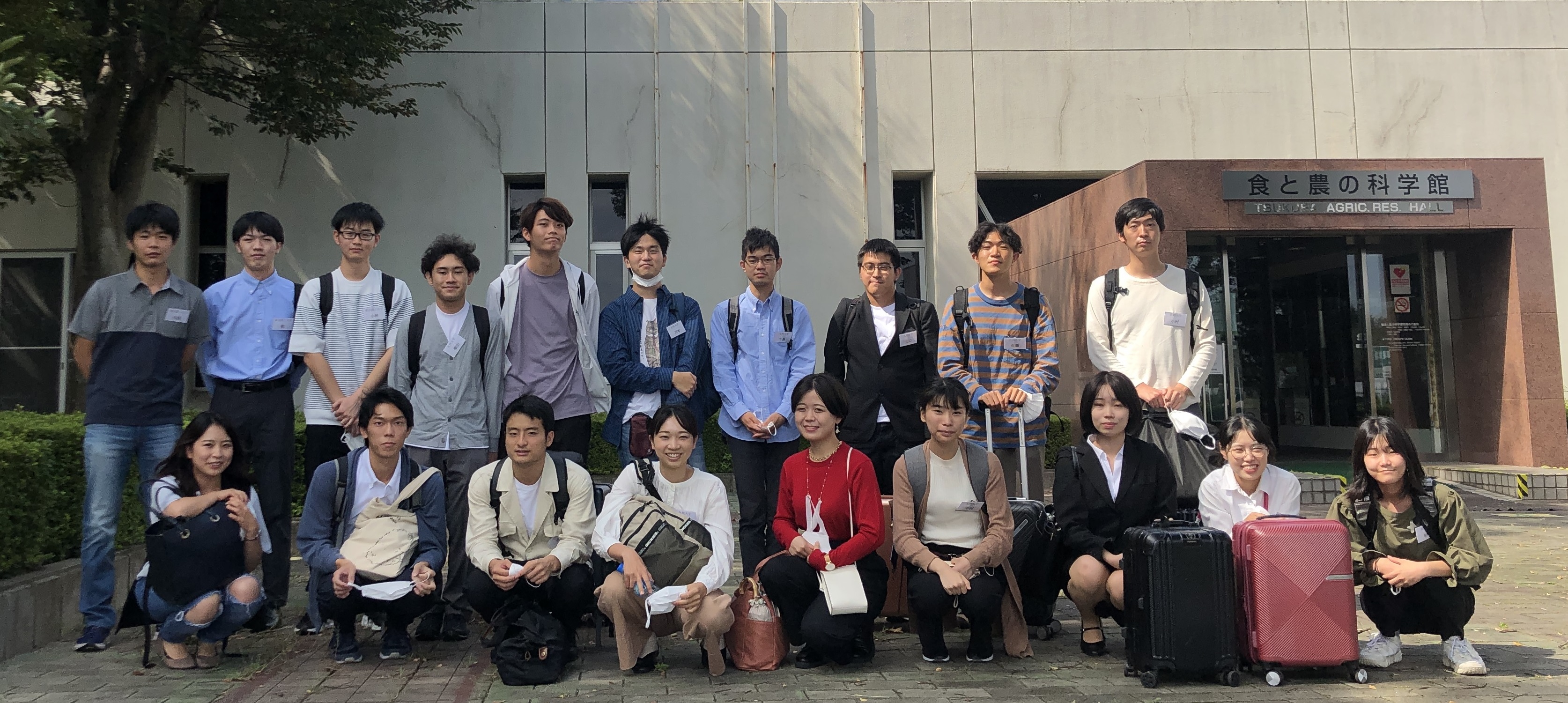
In response to numerous requests from students who said, “I’m interested in AIST! I want to learn
more
about it!”, the Geosphere Chemistry Research Group held an internship on September 26 and 27.
A
total of 19 students from Kyushu University, Kobe University, Kyoto University, and Tokyo University
of
Agriculture and Technology participated in this program.
To introduce participants not only to
the
Geosphere Chemistry Research Group but also to AIST’s various initiatives, the program was designed to
feature presentations from a wide range of departments and groups, including the International Joint
Research Center for Zero Emission, the AI Center, the Environmental Innovation Research Division, the
Public Relations and Services Office, and the General Affairs and Safety Group.
Day 1
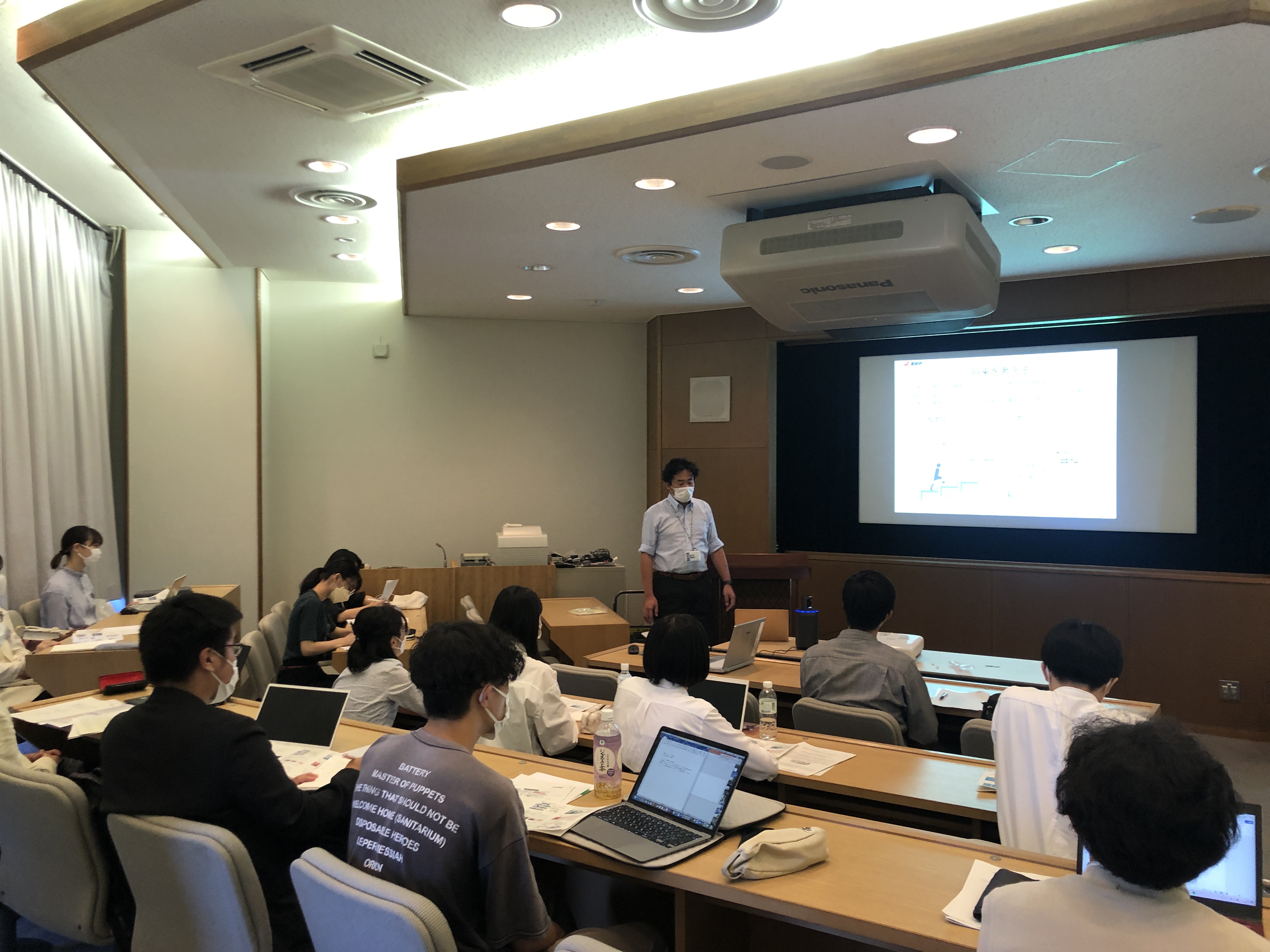
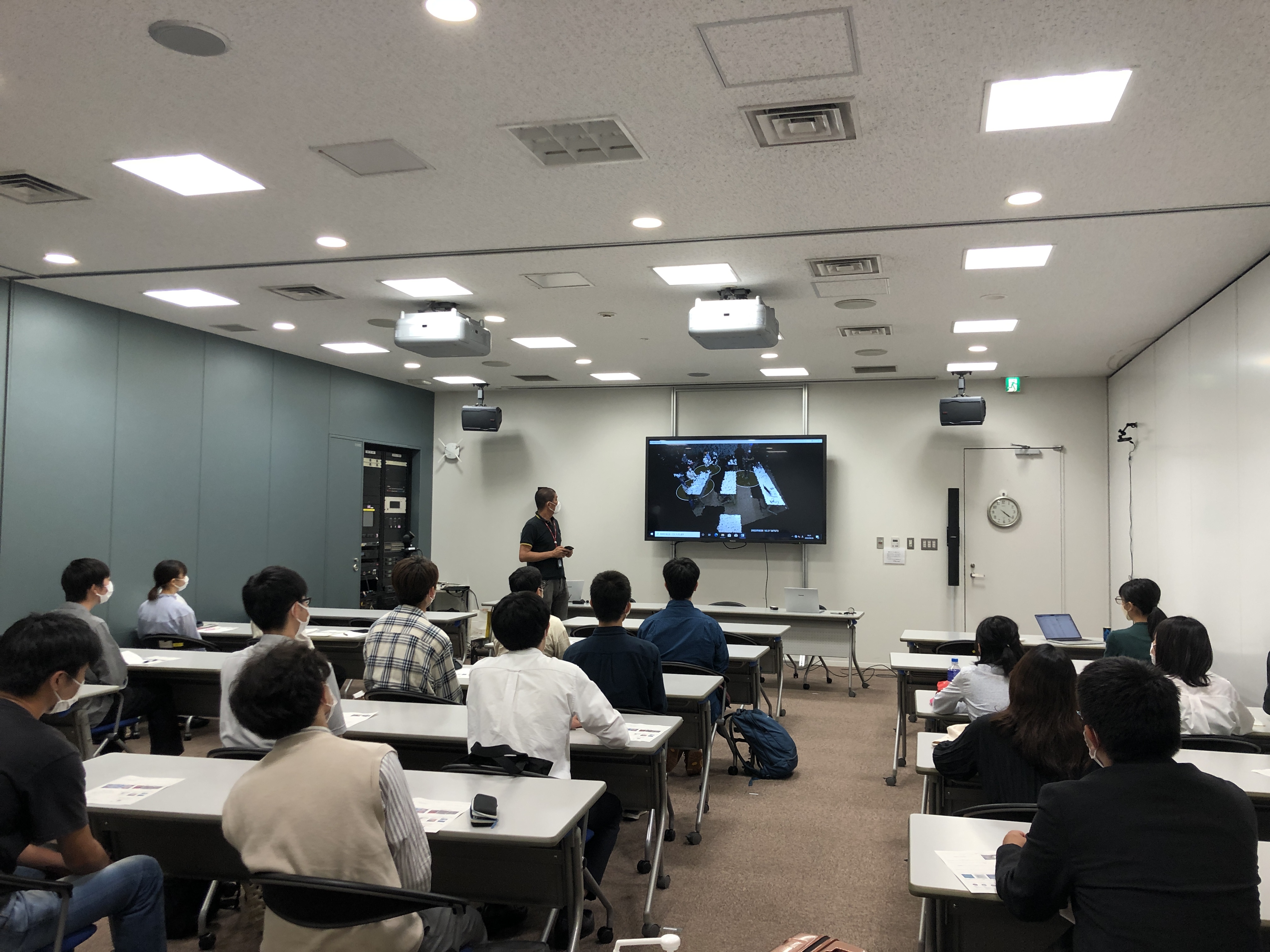
We conducted the lectures listed below and laboratory tours.
| Lecture Title |
Lecturer |
| Introduction to the International Joint Research Center for Zero Emissions |
Energy and Environment Division, International Joint Research Center for Zero Emissions
Deputy Director: Yuki Kudo |
| Introduction to the Division of Geosphere Resources and Environment |
Geological Survey of Japan, Division of Geosphere Resources and Environment
Division Director: Hiroyuki Imaizumi |
| Hunting (Culturing) Microorganisms from the Subsurface Environment |
Geological Survey of Japan, Division of Geosphere Resources and Environment
Principal Researcher: Yasuki Katayama |
| Analysis of People Flow at Large-Scale Events |
Human Information Engineering Division, AI Center
Masateru Onishi, Head of the Social Intelligence Research Team |
| About AIST’s Public Relations Activities |
Public Relations Department, Public Relations Services Office, Publications Group
Group
Leader: Keiko Hasegawa |
Day 2
Participants attended the lectures listed below, toured the Geological Survey Specimen Museum, and
visited the National Agriculture and Food Research Organization (NARO).
| Lecture Title |
Lecturer |
| Let’s Hear About Administrative Roles at AIST! |
Tsukuba Central No. 7 Office, Operations Division, General Affairs and Safety Group
Group Leader: Hidemi Sato |
| Synthesis of Various Synthetic Materials—Recovering Everything from Pollutants to Phosphorus
and Carbon Dioxide |
Geological Survey of Japan, Comprehensive Research Center, Department of Geosphere Resources
and Environment
Principal Researcher Kazuya Morimoto |
| An Introduction to Recent Research on Environmental Microorganisms |
Energy and Environment Research Planning Office, Environmental Creation Research
Division
Principal Researcher, Yuya Sato |
Feedback from Participants
Until now, I had virtually no idea what a research career entailed, but through this internship, I
gained knowledge and was able to form a picture of it—albeit a vague one. I believe that gaining a
variety of experiences will definitely be beneficial when deciding on my future career path, so this
was
truly a valuable experience.
Until now, when I heard the word “researcher,” I had a strong image of someone working alone, but
based
on this internship, I realized that research is made possible by various relationships, such as
connections among researchers and with administrative staff.
I could feel the passion for research among the people working at AIST, who
are
conducting research that benefits society and aligns with their personal interests.
Although it was only a two-day program, it was a valuable experience that allowed me to learn a great
deal about research careers, research topics, administrative roles, and even the National Agriculture
and Food Research Organization (NARO). It was also a valuable experience in helping me decide whether
to
pursue a career in research in the future.
Although it was only a short two-day period, I was very grateful to have had the opportunity to hear
valuable insights from so many researchers. There was a great deal of fascinating research, but I was
so
focused on taking it all in that I struggled to come up with questions, which I found frustrating. I
realized that I need to make a habit of constantly asking questions so that I’m prepared when similar
opportunities arise in the future.
I learned that, among the three major national research institutes, this one
conducts the most practical research and is a research facility that is closely attuned to the needs
of
the people.
It is an institution with specialists in various fields, and I got the impression that it is a very
important organization in Japan—one that conducts academic research while also making improvements to
solve practical problems so that the results can be applied to society and industry.
I clearly sensed that it is a large organization, with stronger connections
among researchers and between researchers and administrative staff than I had imagined.
The research facilities are excellent, and it seemed like a very comfortable
place to work for anyone passionate about research.
Until now, I had virtually no concrete image of what a research career entailed, but through this
internship, I gained knowledge and was able to form a picture—albeit a vague one—of what it might be
like. I believe that gaining diverse experiences will definitely be beneficial when deciding on my
future career path, so this was truly a valuable experience.
Throughout the internship, I felt I learned a great deal by hearing directly from researchers about
things I wouldn’t have been able to understand just by staying at university, and at times by
observing
firsthand how they actually conduct their research. I had such a meaningful time that I would
definitely
like to participate again if a similar opportunity arises.
It was great to come to Tsukuba and hear from researchers in different fields as well as staff in
general administrative roles. I had a vague idea of what it might be like if, by some chance, I were
to
join AIST.
AIST’s public relations department uses the tagline, “The daily life of research is extraordinary,”
and
for me, too, the daily lives of the people working at AIST and the National Agriculture and Food
Research Organization (NARO) were truly extraordinary. For example, I was able to learn about concepts
like “zero emissions”—terms I’d often heard but didn’t really understand in terms of their specific
goals or the research being conducted. Furthermore, being able to enter the research institute
buildings
and laboratories was a valuable experience.I was able to sense the unique characteristics of both AIST
and NARO, but these are things you simply can’t understand without visiting in person. Furthermore, it
was fascinating to listen to the researchers and gain a glimpse into their thought processes—such as
the
purposes and interests driving their research.
I was able to learn more about AIST. While I knew the name and that it is a national research
institute, I gained insight into how its research focus and organizational structure differ from those
of RIKEN and universities. I was impressed by the positive atmosphere between the research staff and
the
general administrative staff; it felt different from the relationship between administrative staff and
faculty members at universities. I could sense the shared determination among both research and
general
administrative staff at AIST to work together to advance the institute. It was a good opportunity to
reflect on my own approach to research.
I was able to hear about a wide variety of research topics, which made for a very valuable
experience.
Since I had been considering conducting research using microorganisms at university, I found the
content
of this visit—which included many discussions on microorganisms—particularly interesting. Going
forward,
I intend to actively seek out information beyond just internships and continue learning.
I hope this initiative will inspire young people, who are the future of our society, to pursue their
studies and careers, and that it will serve as a catalyst for them.