
- We elucidate the formation and growth mechanisms of deposits generated in the combustion chambers and exhaust gas recirculation (EGR) systems of gasoline and diesel engines through chemical analyses and related approaches.
- The main components of hard, lacquer-like deposits formed in the EGR systems of diesel engines are polycyclic aromatic hydrocarbons (PAHs) contained in the combustion gases. In piping systems with temperature gradients, PAHs that reach their dew point condense and contribute to deposit growth.
- Deposits also contain polymeric substances. These are formed through polymerization and cross-linking reactions, such as amide and ester bond formation, involving not only PAHs but also oxidized and nitrated PAHs.
Research Topics for Industry Needs
(Topics studied with industry associations and consortia)
Deposit Formation Mechanisms and Mitigation Technologies
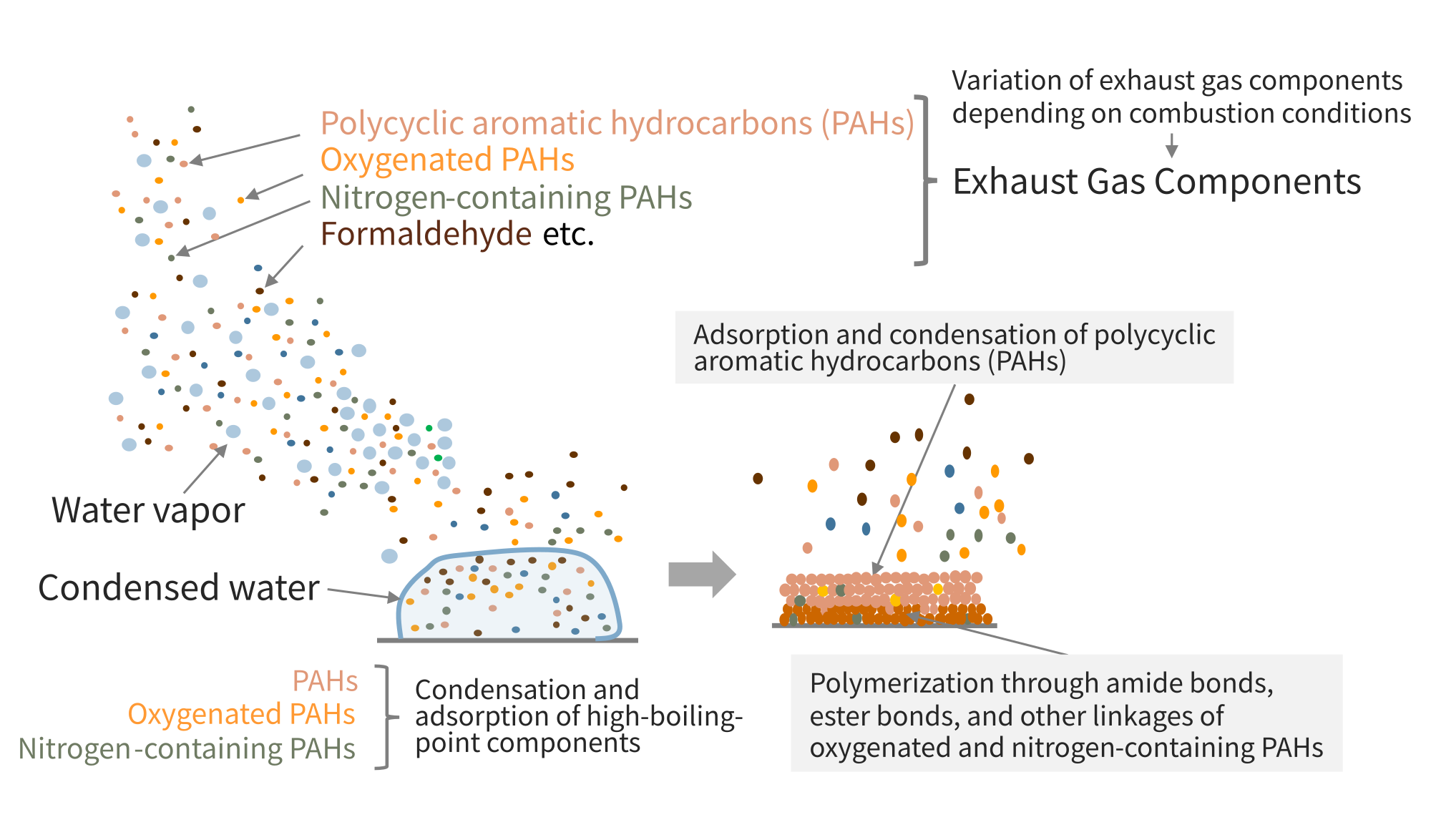
Deposit formation mechanisms derived from detailed analyses of exhaust gas and deposit components
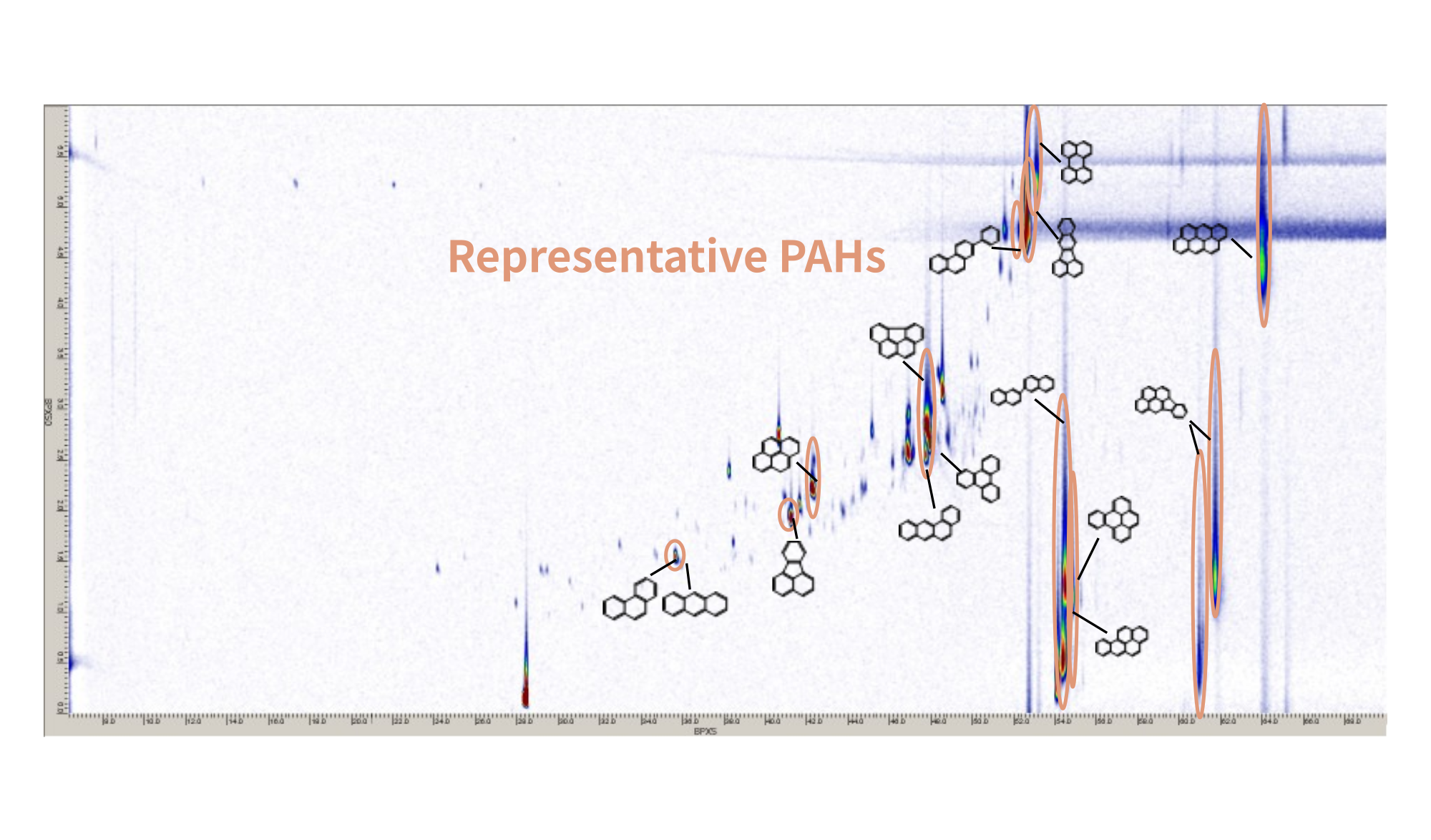
GC×GC-TOFMS chromatogram of the THF-soluble fraction of deposits
Formation mechanisms and mitigation technologies of emissions, including OPAHs
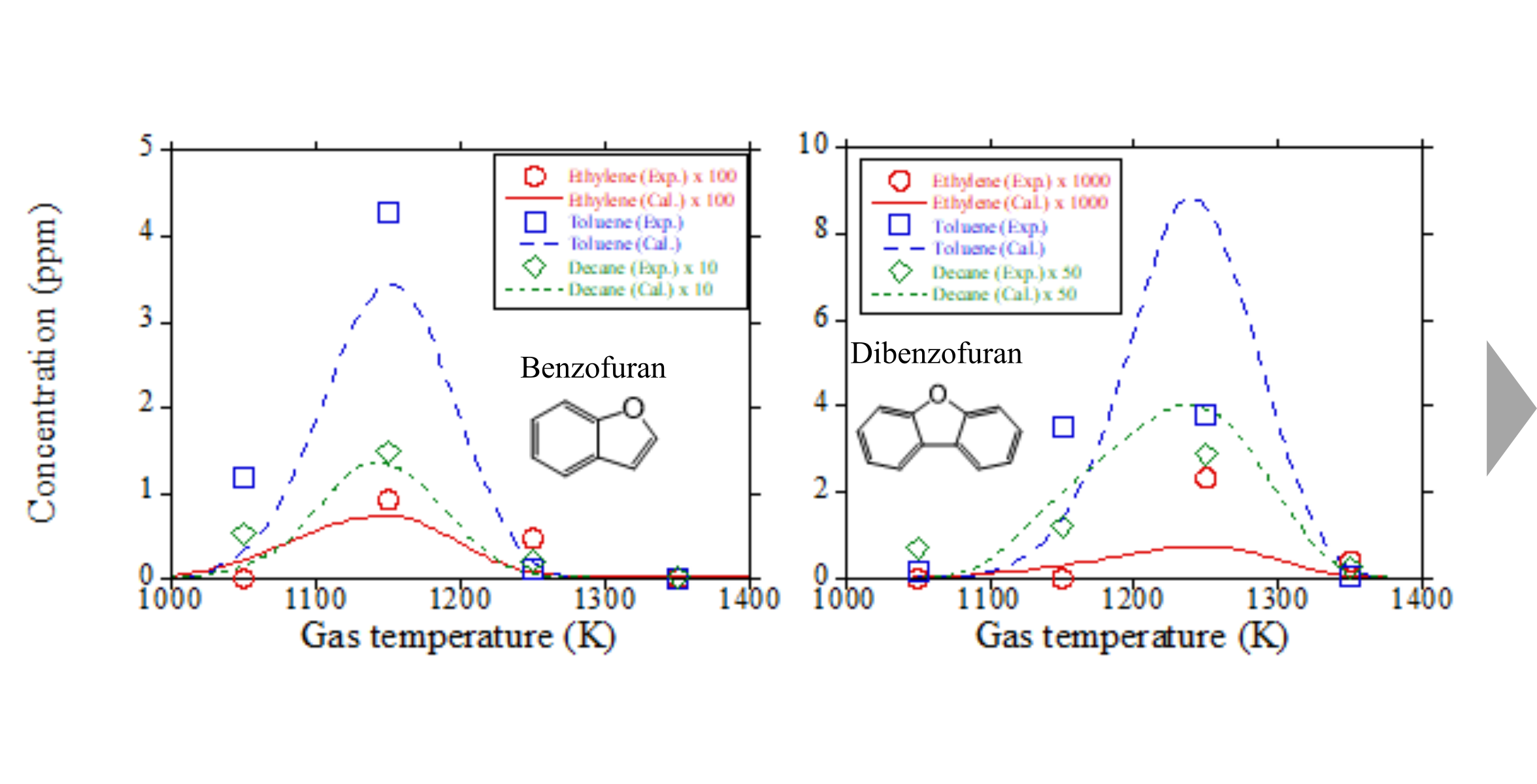
Comparison of the measured and simulated data
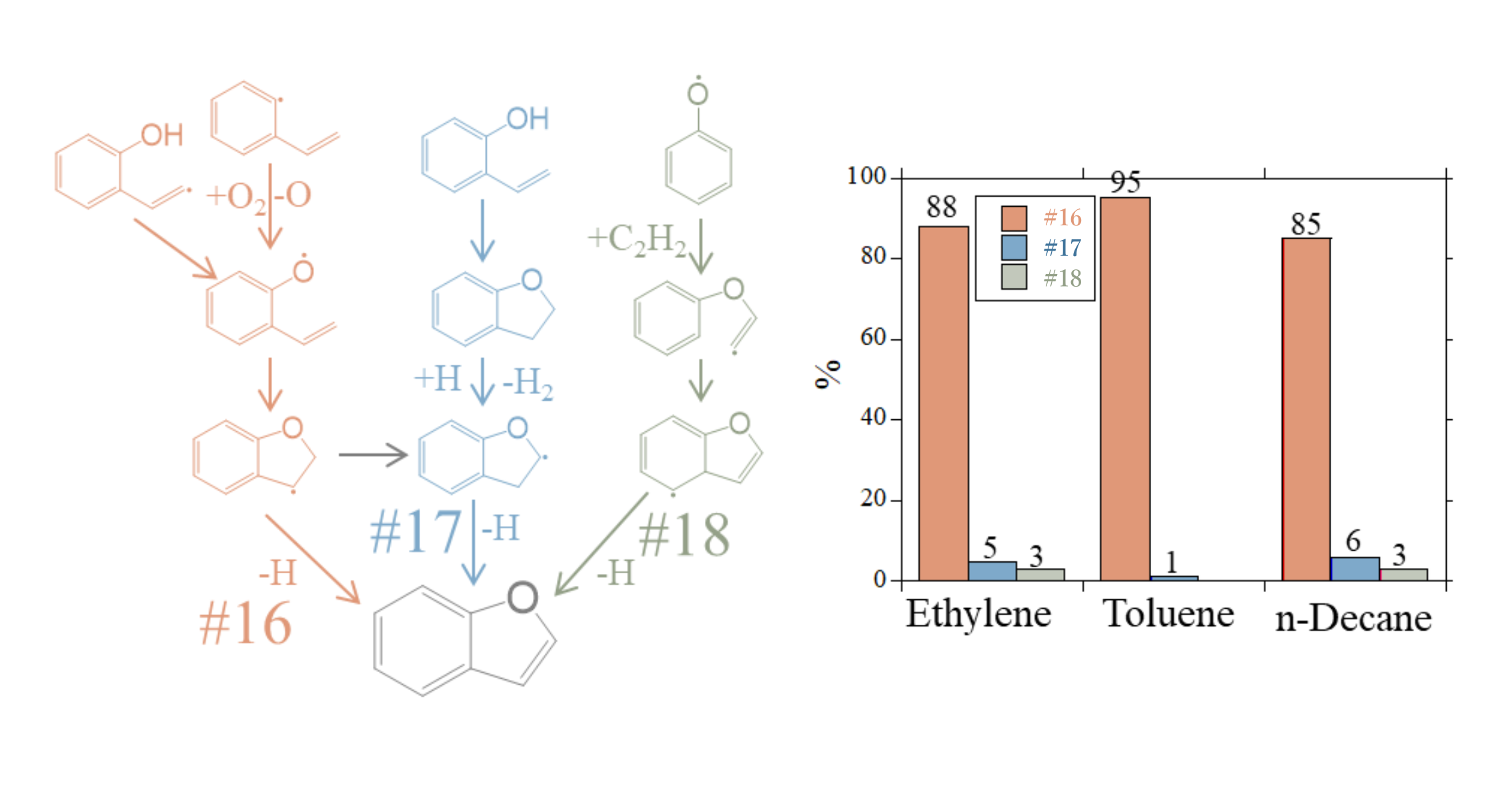
Analysis of OPAH formation using a kinetic model
- An evaluation method was developed to quantify polycyclic aromatic hydrocarbons (PAHs) and oxygenated PAHs (OPAHs) formed during combustion in a tubular flow reactor.
- A detailed kinetic model to reproduce the experimental data is under development. Also, kinetic analyses to reveal the formation pathways of PAHs and OPAHs are performed.
- The formation pathways of PAHs and OPAHs are examined using other reactors and quantum chemical calculation through the collaboration with other research groups.
Carbon-Recycled Fuel Synthesis Technologies
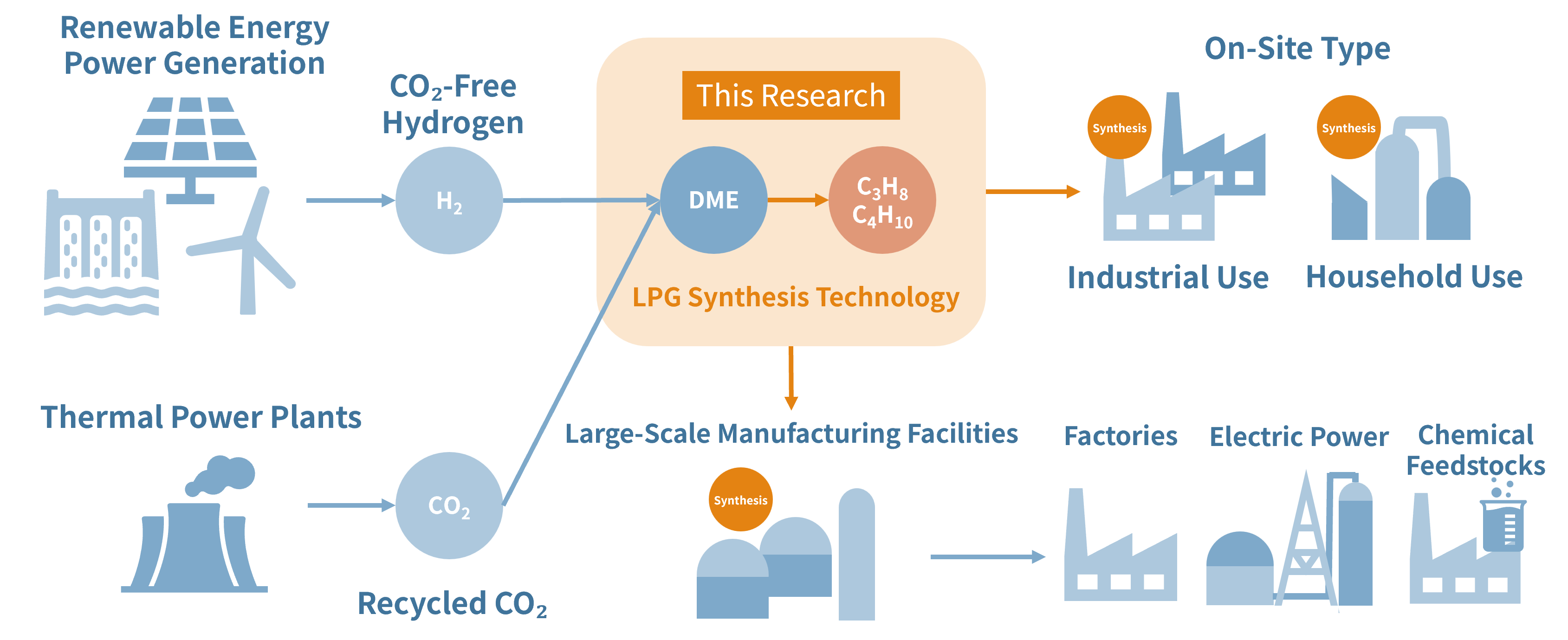
- Owing to its high versatility, excellent portability, and large market scale, liquefied petroleum gas (LPG) is an energy source that will continue to require a stable supply in the future. Demand is expected to reach approximately 8 million tons per year by 2050, making carbon-neutral measures for LPG indispensable.
- In this research, we aim to develop technologies for the high-efficiency production of propane and butane from dimethyl ether (DME), which is synthesized as an intermediate from recycled CO₂ and H₂.
- To this end, we will advance catalyst improvement and process design studies at the laboratory scale, and based on these results, conduct demonstrations at larger scales.