Integrated Research Center for Nature Positive Technology
Integrated Research Center for Nature Positive Technology
Integrated Research Center for Nature Positive Technology
Members
Position
Name
Primary/Concurrent
Specialization and Research Achievements
Center Director
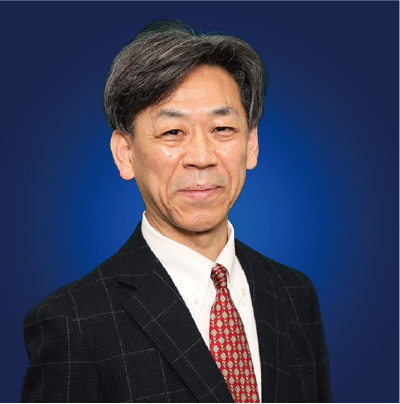
Hiroyuki Imaizumi
Director
Hiroyuki Imaizumi
Through co-creation and collaboration with companies and other organizations
facing specific challenges related to nature restoration, we combine AIST’s
technological seeds to solve those challenges. We develop integrated
technologies—including measurement, assessment, and mitigation measures—that
contribute to the conservation and restoration of natural capital, thereby
promoting the realization of a nature-positive society.
Responsibilities
Resource Engineering and Acoustics
Deputy Director
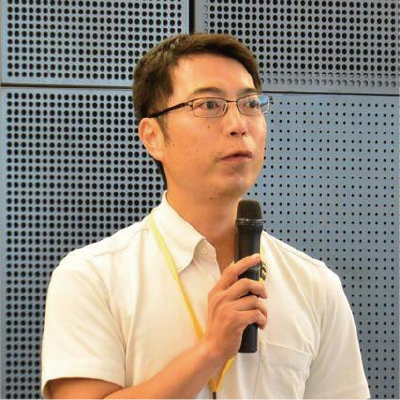
Tetsuo Hotaka
Deputy Director
Tetsuo Hotaka
My research has focused on abandoned mines, soil and groundwater, infectious
diseases, and nuclear disasters. I am committed to advancing technology
development and network building that contribute to natural capital
assessment.
Responsibilities
Risk assessment, socio-economic impact analysis, and solving social issues
Natural Capital Database Construction and Value Analysis Research Team
I conduct research on nano- and microplastics in the terrestrial environment and
evaluate the mobility of contaminants near the groundwater table. In addition to this
research, I also conduct research on nature-positive soils.
Primary Responsibilities
Environmental risk, transport
phenomena
Researcher
Naoshi Yoshihara
Researcher
Naoshi Yoshihara
I am researching whether sudden environmental changes, such as landslides, affect the
water quality of rivers and groundwater.
Primary Responsibilities
Geomorphology, Water
Chemistry
Researcher
Yuri Hashimoto
Researcher
Yuri Hashimoto
I am interested in developing environmental assessment technologies that utilize
environmental DNA and soil microorganisms.
To date, my research has primarily focused on the use of microorganisms for the
remediation of groundwater and soil contamination in urban areas. Going forward, I
intend to expand my research into natural environments and continue the search for
microorganisms that can contribute to environmental restoration.
Responsibilities
Environmental Microbiology, Soil
Chemistry
Researcher
Kei Ninomiya
Researcher
Kei Ninomiya
I use vibrations for underground imaging, monitoring, and moving object detection. While
exploring various ways to utilize vibrations, I am also working to integrate this
technology with other technologies.
Natural Capital Assessment Technology Research Team
Position
Name
Primary/Concurrent Role
Specialization/Research Achievements
Research Team Leader
Ryo Iguchi
Research Team Leader
Ryo Iguchi
I have been engaged in connectivity analysis and environmental impact assessments using
genetic analysis, and more recently, I have been working on research related to
environmental DNA. Going forward, I would like to actively pursue collaborative research
with other fields.
Coordinator
Molecular Ecology
Researcher
Naoki Saito
Researcher
Naoki Saito
I conduct research on the impact of physical environments on marine ecosystems,
focusing on coastal and open-ocean areas. My work involves numerical modeling of
ocean currents, dispersion simulations of plankton and suspended matter, and image
analysis utilizing machine learning.
Primary Responsibilities
Ocean Physics, Ocean Current
Simulation, Image Analysis
Researcher
Hiroki Kise
Researcher
Hiroki Kise
I am engaged in taxonomic and molecular ecological research to elucidate the
mechanisms underlying the biodiversity and conservation of marine organisms
inhabiting coral reefs and the deep sea.
Primary Responsibilities
Population genomics and taxonomic research based on fieldwork (from coral reefs to the deep sea)
Principal Researcher
Yuki Ota
Principal Researcher
Yuki Ota
Through geochemical analysis of environmental samples such as marine and lacustrine
sediments, I am working to elucidate material cycles related to ecosystems and
reconstruct long-term environmental changes.
Responsibilities
Geochemical analysis (CNS isotopes, major and trace element analysis, etc.), material cycle
analysis, paleoenvironmental reconstruction
Researcher
Yuhei Terada
Researcher
Yuhei Terada
I am developing biosensing technologies to detect unknown biomolecules in the
environment by utilizing the synthesis and design of artificial materials based on
glycan polymers. I am conducting pioneering research and technological development
with the goal of creating next-generation materials that can replace antibodies.
Responsibilities
Synthesis and design of molecular recognition materials based on glycan polymers and
water-soluble polymers; biointerfaces; biosensing and molecular recognition analysis; surface
plasmon resonance (SPR) technology; surface analysis
Principal Researcher
Nobuyuki Aoki
Principal Researcher
Nobuyuki Aoki
We plan to investigate bioaerosol collection methods aimed at analyzing atmospheric
eDNA. Additionally, our technology for accurately determining the concentrations of
atmospheric major components (oxygen, argon) and greenhouse gases (carbon dioxide,
methane, etc.) is among the best in the world.
Responsibilities
Ultra-high-precision standard gas preparation technology, high-precision gas analysis
technology, gas handling technology
Senior Principal Researcher
Zhu, Huanbei
Senior Principal Researcher
Hikita Shu
I am dedicated to mastering elemental analysis techniques, with a focus on ICP-MS.
My research focuses on enhancing sensitivity, separating and suppressing
interference, and ensuring data validity. I aim to develop peripheral equipment and
provide high-quality data that will serve as the foundation for the AI era. Please
feel free to contact me if there is anything I can assist you with.
In collaboration with researchers from AIST’s seven core research areas (Energy and
Environment, Bioengineering, Information and Human Engineering, Materials and
Chemistry, Electronics and Manufacturing, the Geological Survey of Japan, and the
National Metrology Institute of Japan), as well as various external research
institutions and companies, we are currently conducting a wide range of
interdisciplinary research and social implementation activities, with a focus on
agriculture-engineering and medical-engineering collaboration.
Concurrent Positions
Biosensing, Air Sampling, Physics, Chemistry, Optics, Measurement Technology, Materials Science,
Nanoscience, Agriculture-Engineering Collaboration, Medicine-Engineering Collaboration,
Equipment Design and Prototyping
Research Team
Hiroshi Aoki
Research Team
Hiroshi Aoki
I am engaged in the development of sensing technologies targeting biological
substances that serve as indicators for assessing ecological environments.
Currently, I am leading research and development focused on the rapid, simple
detection, analysis, and on-site evaluation of environmental DNA using sensor
arrays. If you know of any interesting targets, please consider collaborating with
me.
Concurrent Positions
Biosensing, electrochemical measurement, molecular recognition probes and sensor arrays, rapid
and simple detection of a wide range of targets including nucleic acids, proteins, and
peptides
Research Team
Satoshi Yamamoto
Research Team
Satoshi Yamamoto
Nice to meet you.
Concurrent Positions
Remote Sensing Geology,
Rock Spectroscopy, Satellite Data Calibration and Validation Technology
Ecological Impact and Countermeasure Technology Evaluation Research Team
Position
Name
Primary/Concurrent
Specialization and Research Achievements
Research Team Leader
Wataru Naito
Research Team Leader
Wataru Naito
I conduct research on environmental risk assessment and management for specific
substances (primarily metals) and locations, as well as the assessment methods that
support these efforts. My work includes practical research such as dose assessment in
Fukushima, and recently I have also been engaged in research on the environmental risk
assessment of microplastics and measures to mitigate the risks of COVID-19.
Primary Responsibilities
Environmental risk assessment
and exposure analysis (primarily of chemical substances)
Principal Researcher
Yuichi Iwasaki
Principal Researcher
Yuichi Iwasaki
I am engaged in research on the ecological risk assessment of chemicals, primarily
metals, using field surveys of aquatic organisms in rivers and modeling of species
sensitivity distributions. In the context of TNFD and Nature Positive, I believe
that ecological risk assessments based solely on laboratory toxicity tests lack a
clear connection to actual biota, and that biological monitoring in real-world
environments plays a significant role.
I conduct toxicity assessments of new nanomaterials and chemical substances. My
research primarily focuses on human health, and I am actively engaged in developing
assessment methods that make full use of cell culture techniques and technologies
for analyzing biological information at the genetic level.
Concurrent Roles
Hazard testing, cell culture and gene expression analysis, nanotoxicity testing (including
sample dispersion and preparation)
Principal Researcher
Masafumi Kamo
Principal Researcher
Masafumi Kamo
What exactly is ecological risk assessment? Why do we do it? How should we measure its
impacts? Can those impacts be predicted? I’m interested in approaches to ecological risk
assessment, including questions like these. While I occasionally work with specific
substances, I use them only as case studies for assessment; fundamentally, my goal is to
build a framework. Mathematical biologists are known for being overly theoretical, and
I’m probably just as theoretical myself.
Program Manager
Risk Assessment,
Ecology
Principal Researcher
Yuya Sato
Principal Researcher
Yuya Sato
I have been researching the roles of microorganisms inhabiting various environments,
including soil, cities, forests, rivers, insects, plants, and wastewater treatment
facilities. I believe that natural environments and natural capital are supported by
networks of living organisms (ecosystems), and that microorganisms play a vital
foundational role in this. I hope to contribute to achieving a nature-positive
future through my research on microorganisms.
Areas of Expertise
Microbial analysis (microbiome analysis, metagenomics, metatranscriptomics, culturing, genetic
engineering, etc.), interactions and symbiotic relationships between insects, plants, and
microorganisms
Principal Researcher
Kaori Yamaoka
Principal Researcher
Kaori Yamaoka
As part of environmental impact assessments related to the development of marine
energy and mineral resources, I am primarily engaged in elucidating the dynamics of
metals in the marine environment. To help achieve a Nature-Positive future, I aim to
provide technologies that contribute to diagnosing and improving material cycles in
local environments.
Responsibilities
Material cycle analysis based on marine geochemistry (elemental and isotopic analysis of rocks,
sediments, seawater, biological samples, etc.)
Principal Researcher
Chikashi Matsumoto
Principal Researcher
Chikashi Matsumoto
To date, I have conducted research in diverse regions—including mountainous areas,
urban centers, mines, and island regions—to elucidate the origins of groundwater and
the mechanisms governing water quality formation, as well as to explore ways to
coexist with nature. Moving forward, I intend to advance research that leads to
practical societal applications, always keeping the concept of “Nature Positive” in
mind.
Areas of Expertise
Resource Engineering,
Coastal Surveys, Soil and Groundwater Surveys, Geochemical Analysis
Researcher
TUM Sereyroith
Researcher
TUM Sereyroith
I am a researcher in sustainable remediation technologies, specializing in passive
treatment of acid mine drainage, soil contamination management, applied
geochemistry, and surface water and groundwater modeling. I am dedicated to
nature-positive solutions and ecosystem restoration.
I have conducted research on the social impact assessment of nuclear disasters and
the social acceptability of waste disposal. In the context of Nature Positive, I
hope to conduct research aimed at fostering harmony among diverse stakeholders
regarding natural capital.
Responsibilities
Social Surveys (quantitative surveys using questionnaires, qualitative surveys using interviews,
quantitative text analysis, etc.)
Research Team Member
Yumitsu Furukawa
Research Team
Yumitsu Furukawa
Nice to meet you.
Concurrent Role
Development of
field-deployable equipment for optical technology, analytical technology, and signal
processing
Attached to Research Team
Yuriko Ishikawa
Research Team
Yuriko Ishikawa
I have developed and released the river model (AIST-SHANEL) and the marine model
(AIST-RAMTB). I would like to further my research to enable the environmental prediction
simulations necessary for achieving Nature Positive.
Concurrent Role
Development of water system
exposure assessment models, aquatic environmental risk assessment
Research Fellow
Kohei Tsuchiyama
Research Fellow
Kohei Tsuchiyama
I will be conducting research on plants and microorganisms. I look forward to
working with you.
Responsibilities
Plant Ecology, Microbiology,
Soil Science
Natural Capital Sustainability Research Team
Position
Name
Primary/Concurrent
Specialization and Research Achievements
Research Team Leader
Akiharu Motoshita
Research Team Leader
Akiharu Motoshita
We provide support to help global supply chains achieve Nature Positive based on
scientific evidence.
Responsibilities
Sustainable Systems Assessment Research Group Environmental Impact Assessment, Sustainability
Assessment, Supply Chain Analysis
Research Team Member
Ryosuke Yokoi
Research Team Member
Ryosuke Yokoi
To ensure the medium- to long-term stability of metal resources, I am conducting
research on the development of methods to assess the impacts associated with metal use
and the evaluation of recycling potential through material flow analysis.
Concurrent Roles
Life Cycle Assessment (LCA),
Life Cycle Impact Assessment
(LCIA), Material Flow Analysis
(MFA), Input-Output Analysis (IOA)
Researcher
Keitaro Maeno
Researcher
Keitaro Maeno
I conduct environmental impact assessments of the entire global supply chain associated
with industrial and corporate production activities, as well as analyses aimed at
building sustainable supply chains.
Primary Responsibilities
Input-Output Analysis, Life
Cycle Analysis
Principal Researcher
Kamrul Islam
Principal Researcher
Kamrul Islam
My primary research focus is on achieving planetary
wellbeing through the sustainable use of natural resources. I am engaged in
output-oriented environmental science research, with a particular emphasis on
sustainability assessments of minerals, water, forests, and biodiversity. My main
research topics include environmental footprint accounting, industrial ecology, mining
and sustainability, global land use and land-use change, and geospatial data analysis in
resource management.
Using an interdisciplinary approach that includes sustainability assessment, hotspot
analysis, environmental impact assessment, and socio-economic analysis, I am developing
methodologies to assess the risks and impacts of natural disasters and climate change,
as well as the effects these impacts have on supply chain systems and natural capital.
My goal is to support the development of disaster-resilient supply chains and the
formulation of climate change resilience policies, thereby promoting harmony with
nature.