
Research Focus
Developing technologies that support the mainstreaming of renewable energy
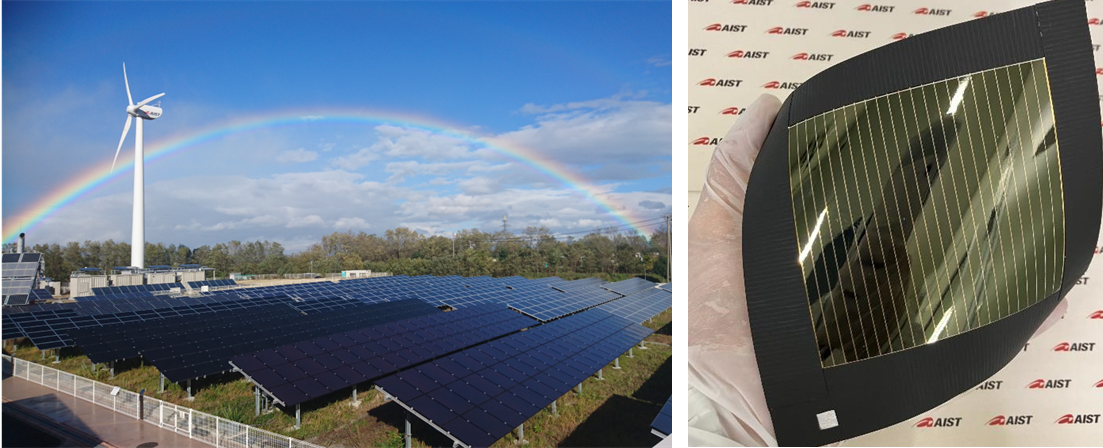
Right: Perovskite solar cell
In Japan’s energy policy, renewable energy is expected to account for 40–50% of the power supply by 2040. To achieve this goal, the AIST is conducting research and development on technologies such as solar cells based on new principles and structures, cost reduction and reliability improvement in solar power generation, enhancement of power output and durability in wind power generation, and technologies aimed at the appropriate utilization of geothermal energy. In addition, AIST is working on innovative technologies to prevent grid instability caused by the increased integration of renewable energy and ensure a stable power supply.
Developing technologies for energy conversion, storage, and utilization
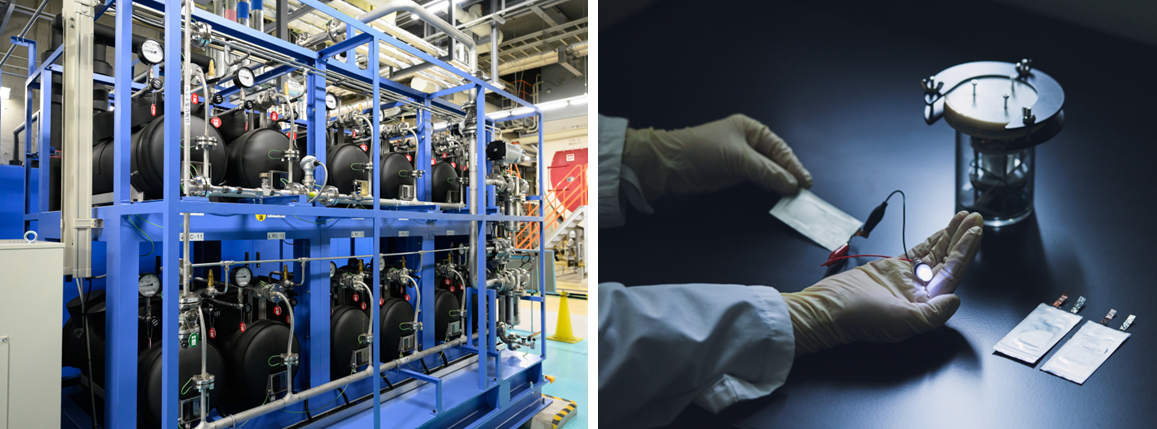
Right: All-solid-state battery
Highly efficient energy storage technologies are essential to resolve the temporal and spatial mismatch between energy demand and supply. AIST is developing technologies that efficiently convert renewable energy and other sources into chemical energy, such as hydrogen, thereby enabling effective storage and utilization. AIST aims to realize energy systems that support daily life with convenience, safety, environmental sustainability, and a stable supply. To this end, research and development of secondary batteries and fuel cells for mobile applications, as well as residential and stationary power sources, is required. In addition, the AIST is working on technologies that enable the efficient use of thermal, electrical, optical, chemical, and mechanical energies.
Developing technologies for stable supply of energy and resources
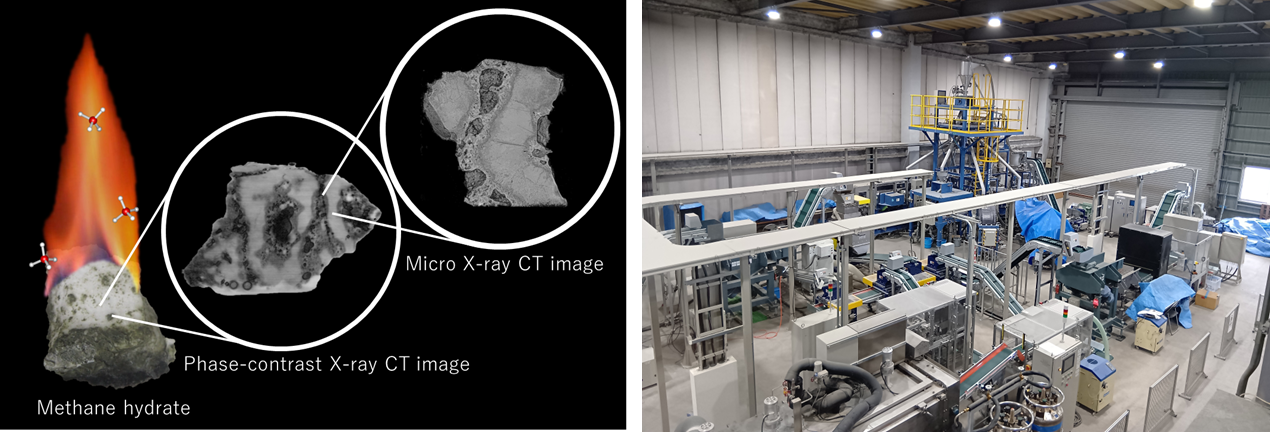
Right: Development of the unmanned sorting system for discarded home appliances
Owing to its limited domestic energy resources, Japan must secure energy security through the development and utilization of new resources. AIST is developing technologies related to the exploration and effective use of unconventional resources, such as methane hydrate. AIST is also working on sorting and recovery technologies tailored to different types of waste products to promote advanced resource recycling of used products such as urban mines and waste plastics.
Toward a sustainable industry–environment symbiosis
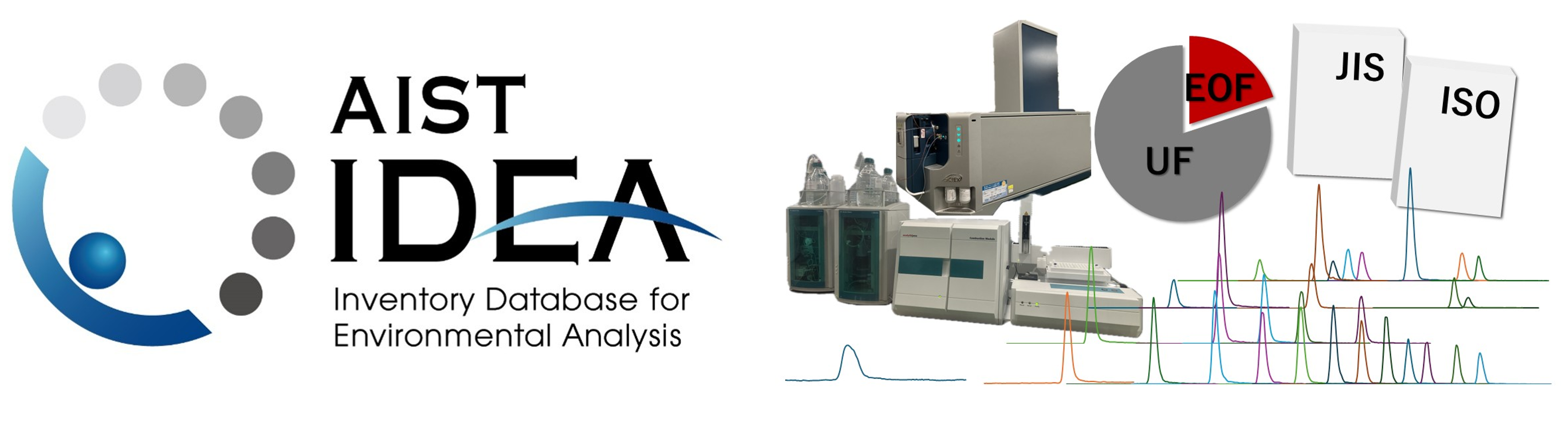
Right: Development and Standardization of Analytical Methods for PFAS
To realize a sustainable society in which industry and the environment coexist, AIST has developed technologies to assess the impact of new technologies and systems on society and to reduce the associated risks. We are currently working on environmental analysis methods and impact reduction technologies for hazardous substances such as certain PFAS and impact assessments related to the use of natural resources. As part of establishing a foundation for evaluating environmental safety and sustainability, AIST conducts impact assessments of natural resource use across global supply chains.