


Press Releases
New
A Voyage Log of Polychaetes Riding on Plastic Bottle Caps
—Estimating the Drifting Pathways of Marine Debris Ecosystems Using Biofouling, Isotope Analysis, and Ocean Current Models—
Details:The Voyage Log of Polychaetes Riding on Plastic Bottle Caps—Estimating the Drifting Path of Marine Debris Ecosystems Based on Fauna, Isotope Analysis, and Ocean Current Models—
New
Joint Research Launches Between AIST Group, Infroneer Holdings, and Maeda Corporation
On July 6, 2026, Infroneer Holdings (hereafter, Infroneer) announced the launch of a joint research initiative aimed at realizing a nature-positive society in the infrastructure sector.
-
This project will use the technology and expertise of the AIST Integrated Research Center for
Nature Positive Technology to work together with Infroneer and Maeda Corporation on:
- Data-driven measures against roadkill (wildlife traffic accidents) aimed at preserving local ecosystems
- Development of ecosystem visualization methods using environmental DNA and other tools to comprehensively understand and visualize the species and distributions of organisms without capturing them
- Using this data to engage in dialogue with local communities to jointly work toward a nature-positive society
Integrated Research Center for Nature Positive Technology ≫
Infroneer Holdings News (July 6, 2026) ≫
Maeda Corporation News (July 6, 2026) ≫
Genetic isolation and low diversity of the endangered Miyako swamp crab revealed at the local scale
—Contributing to the provision of foundational information for conservation—
Details:Genetic isolation and low diversity of the endangered Miyako-sawagani crab revealed at the local scale—Contributing to the provision of foundational information for conservation—
Estimating the Core Coral Population Sources Connecting Coral Reef Islands
– Visualization of Marine Ecological Networks Using Population Genetic Analysis and Kuroshio Current Models –
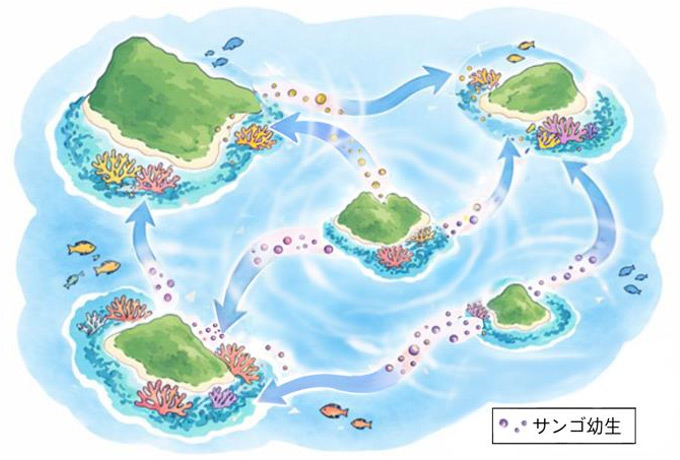
Details:
Estimating Core Coral Individual Sources Connecting Coral Reef Islands—Visualization of Marine Ecological Networks Using Population Genetic Analysis and Kuroshio Current Models—
Interpreting Shallow Marine Environments from Space: "Chlorophyll α Signals" Revealed by Hyperspectral Data
– A New Environmental Monitoring Technology for Satellite Surveillance of Coastal Areas, Achieved Through Interdisciplinary Collaboration Between Space Science and Biodiversity –
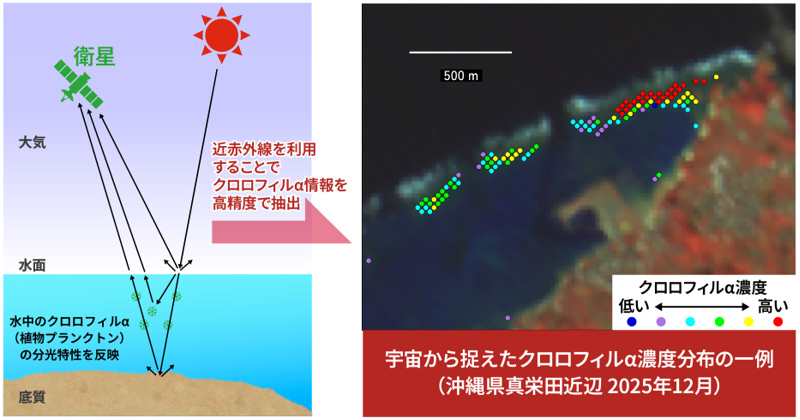
Details:
Interpreting Shallow Marine Environments from Space: "Signs of Chlorophyll α" Revealed by Hyperspectral Imagery—A New Environmental Monitoring Technology for Satellite Surveillance of Coastal Areas, Realized Through Interdisciplinary Collaboration Between Space Science and Biodiversity—
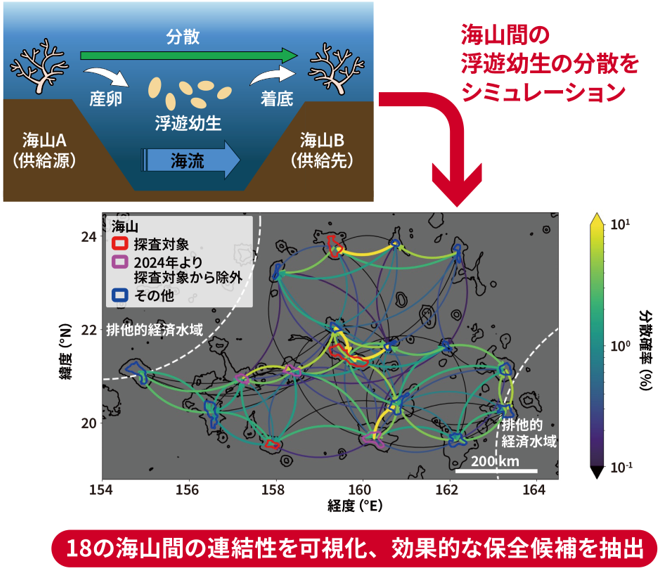
Uncovering Ecological Connections Between Seamounts in the Deep Sea
—Visualizing Connectivity Through Dispersal Simulations of Planktonic Larvae—
Details:
Revealing Ecological Connections Between Seamounts in the Deep Sea—Visualizing Connectivity Through Dispersal Simulations of Planktonic Larvae—
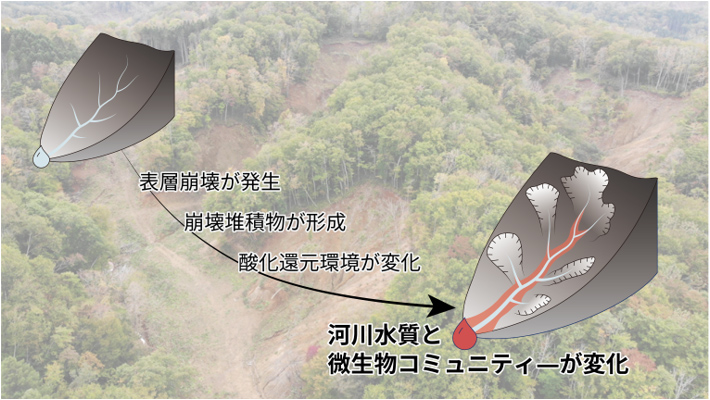
Environmental Changes Caused by Earthquake-Induced Surface Collapse
-Clarifying the Impact of Surface Collapse Caused by the 2025 Hokkaido Eastern Iburi Earthquake on River Water Quality and Microbial Communities-
Details:
Environmental Changes Caused by Earthquake-Induced Surface Collapse—Revealing the Impact of Surface Collapse from the 2018 Hokkaido Eastern Iburi Earthquake on River Water Quality and Microbial Communities—
Establishment of the Nature Positive Nasunohara Alliance
Details:
Regarding the Establishment of the Nature Positive Nasunogahara Alliance ≫
Nasushiobara City Website ≫
Evaluation of the Adsorption of Nanoplastics onto Soil Particles
—A Step Forward in Elucidating the Transport Behavior of Nanoplastics in Soil—
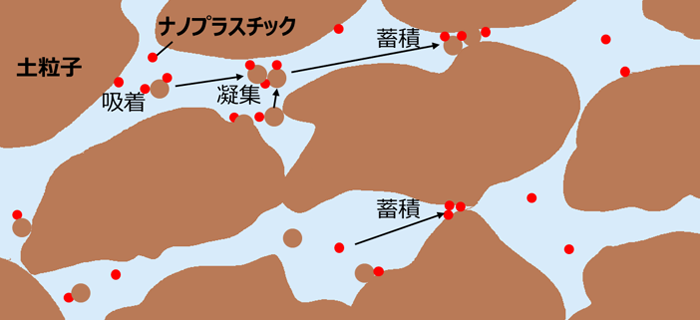
Details: Evaluation of the Adsorption of Nanoplastics onto Soil Particles in Soil – A Step Forward in Elucidating the Transport Behavior of Nanoplastics in Soil –
New Planetary Boundaries for the Use of Crustal Resources Such as Metals
-Estimating the production capacity of crustal resources that may be limited by water resource sustainability-
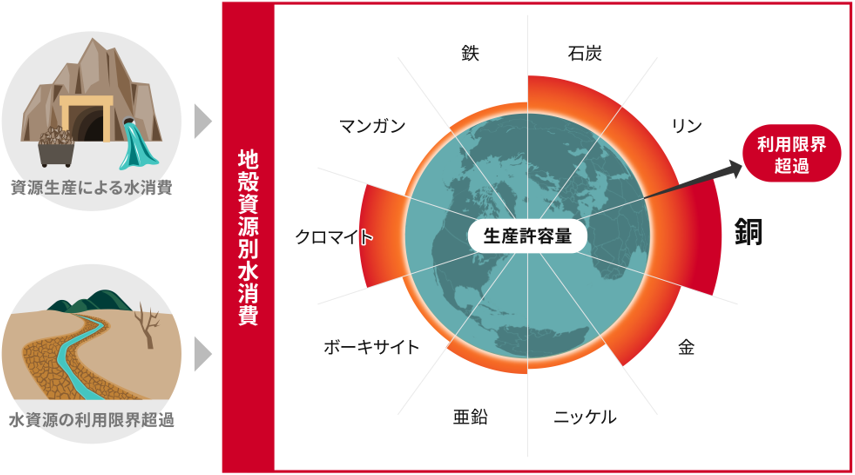
Details: New Planetary Boundary for the Use of Crustal Resources such as Metals – Estimating the Permissible Production Capacity of Crustal Resources That May Be Limited by Water Resource Sustainability –
First Observation of Variations in Atmospheric Oxygen Stable Isotope Ratios at the Parts-per-Million Level
—Toward the Establishment of a New Indicator for Predicting Climate Change—
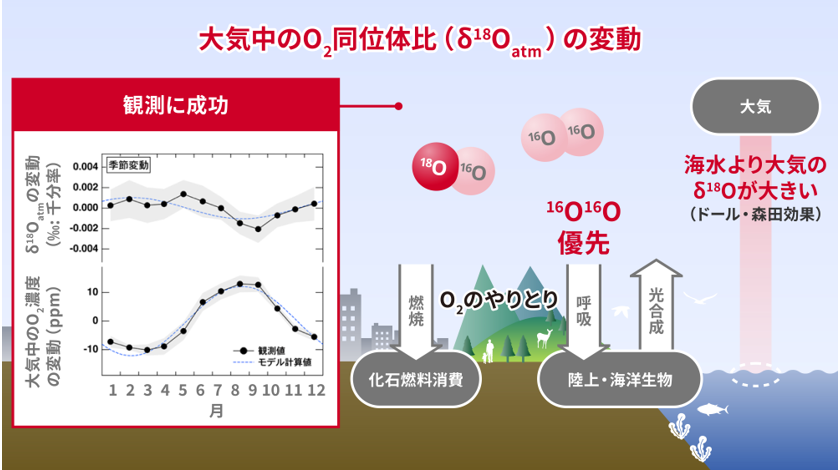
First Observation of Variations in Atmospheric Oxygen Stable Isotope Ratios at the Parts-per-Million Level—Toward the Establishment of a New Indicator for Predicting Climate Change—