On the Publication of the Local History Book “Memories of Shimo-Hatori”
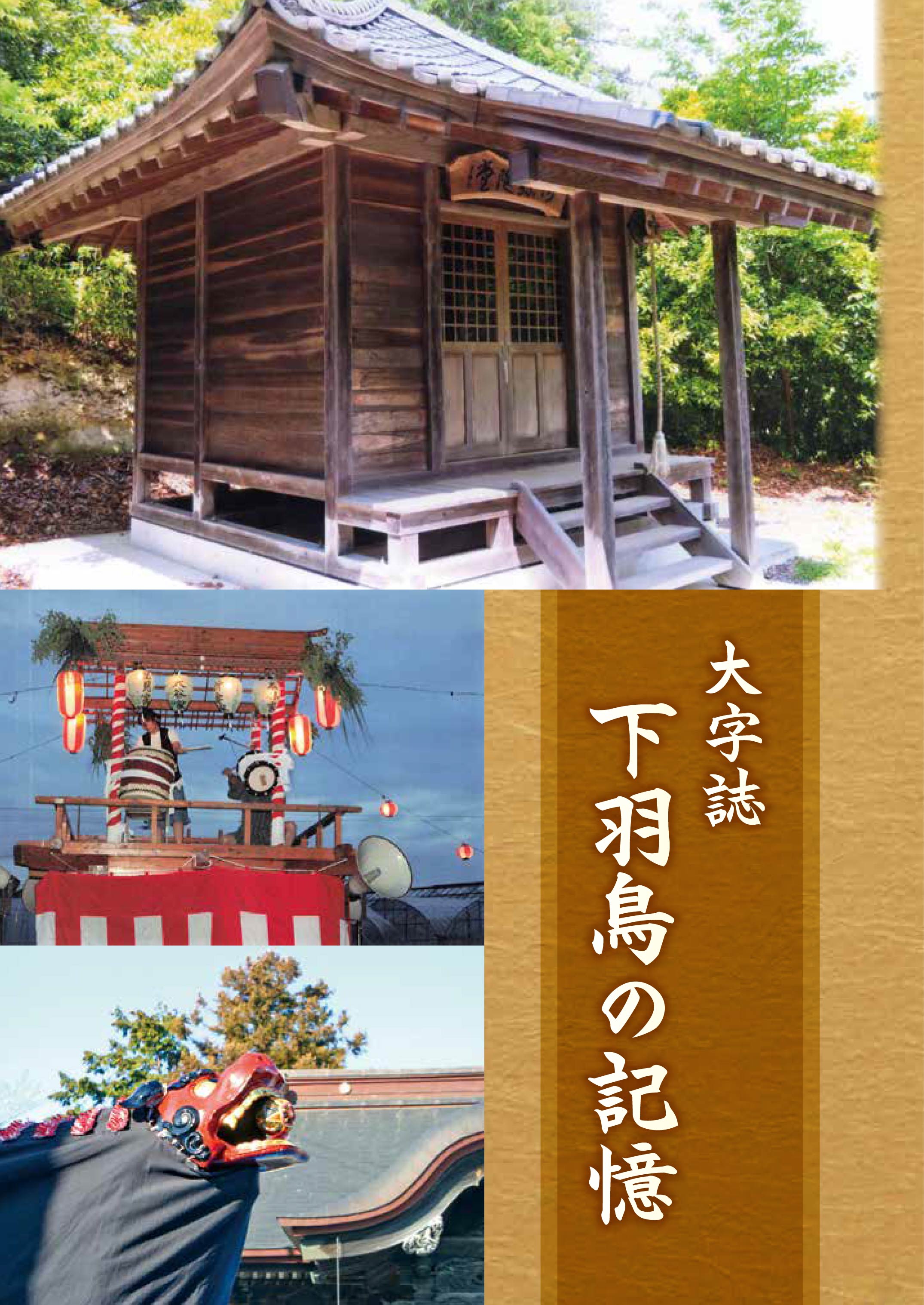
[Research Introduction & Reports]It was in November 2023 that Mr. Kibata approached us with the idea of compiling a local history of Shimo-Hatori. We were able to complete the editing in just over a year after our initial meeting in February 2024, driven by a strong desire to preserve in writing the pre-disaster appearance of our hometown.After numerous meetings, both in person and over the phone, we published “Memories of Shimo-Hatori: A Local History” on February 26, 2025. On March 15 of the same year, at the Shimo-Hatori Neighborhood Association General Meeting, we explained the background and editorial policy behind the publication and were able to distribute copies to every household in the neighborhood.
At the same time, we believe that widely sharing the memories of Futaba Town can contribute to discussions about its future, so while we are distributing copies upon request, due to limited availability, we have also decided to publish the book on our website. We hope that many of you will take the time to read it.
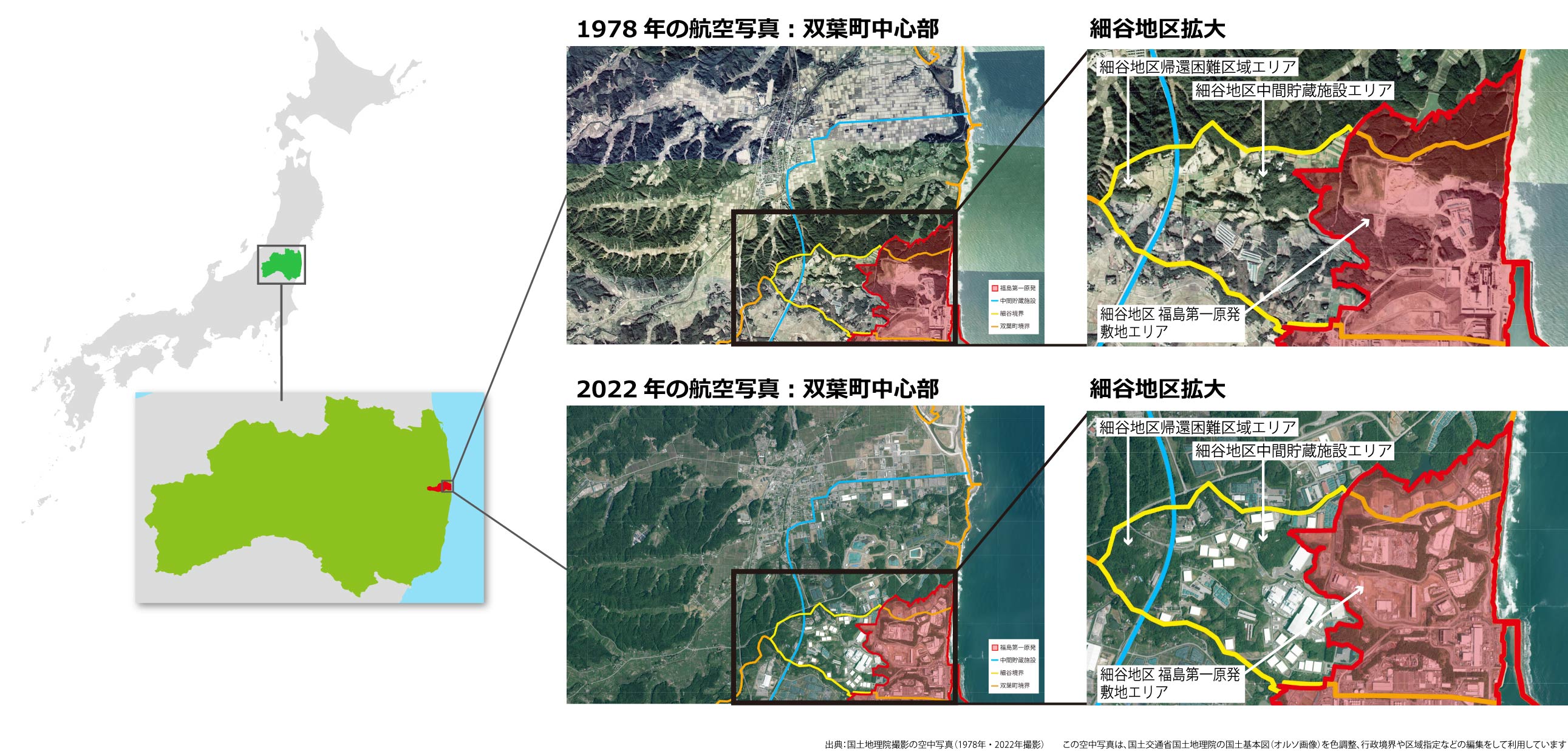
Location and Past and Present Aerial Photographs
[Open Enlarged
Version]
![[Open Enlarged Version]](../../ja/reports/img/simohatori-img.jpg)
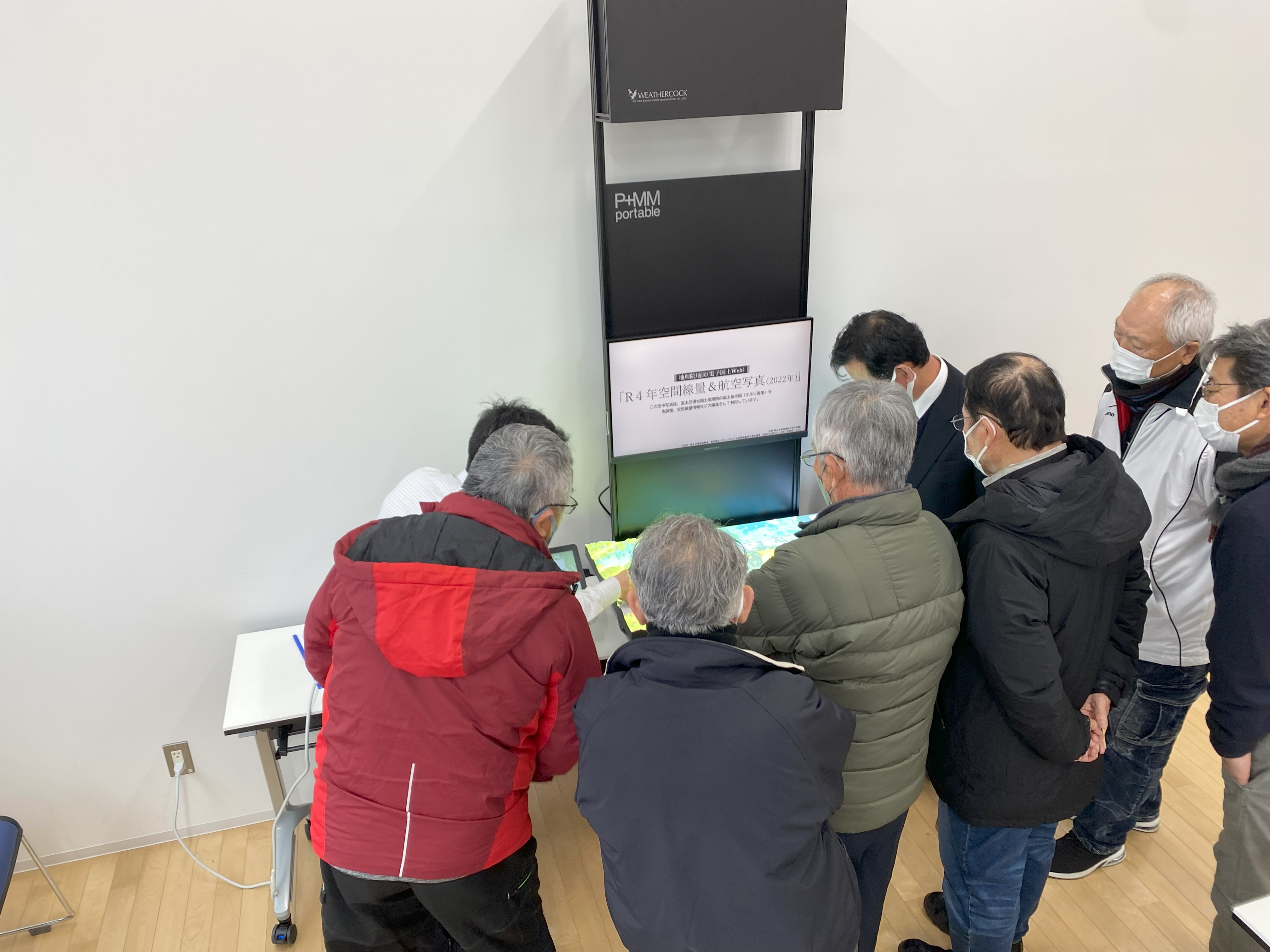
A meeting with the editorial board members
Entrusting Our Hopes to Our Hometown
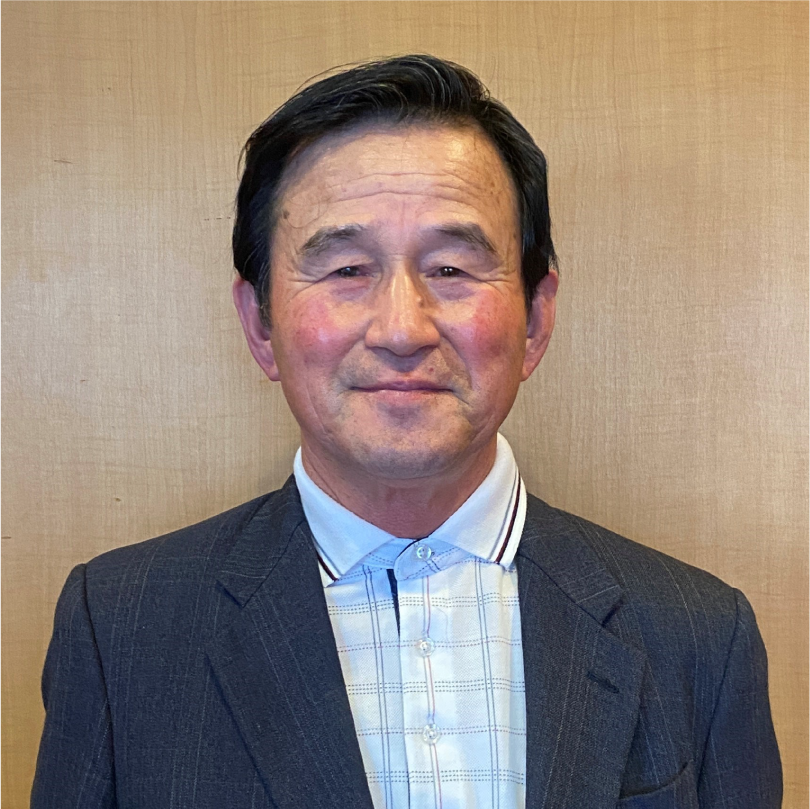
Toshio Kibata, Former Head of the Hatori Administrative District, Futaba Town
 Since the
disaster, every
time I’ve returned to my hometown, I’ve witnessed firsthand how it has been changing. Following the Great East
Japan Earthquake and the nuclear accident that occurred on March 11, 2011, evacuation orders were issued, and
for a time, my hometown became a desolate place, overgrown with weeds and devoid of people.Shimohatori—our
hometown—offered a view of the Abukuma Mountains in the distance, a rural landscape that changed with the
seasons, and squares and shrines where people gathered for Bon dances and festivals, all enveloped in a peaceful
atmosphere that made it a wonderful place to live.
Since the
disaster, every
time I’ve returned to my hometown, I’ve witnessed firsthand how it has been changing. Following the Great East
Japan Earthquake and the nuclear accident that occurred on March 11, 2011, evacuation orders were issued, and
for a time, my hometown became a desolate place, overgrown with weeds and devoid of people.Shimohatori—our
hometown—offered a view of the Abukuma Mountains in the distance, a rural landscape that changed with the
seasons, and squares and shrines where people gathered for Bon dances and festivals, all enveloped in a peaceful
atmosphere that made it a wonderful place to live.
Since around 2022, decontamination and the demolition of houses have gradually progressed, and volunteer
efforts to preserve and manage farmland are underway—efforts aimed at revitalizing the region—which brings me
more joy than anything else. However, on the other hand, I also feel a sense of bewilderment and sadness as I
watch my hometown change.The sights of my hometown that I had always taken for granted—the homes of local
residents and the places filled with childhood memories—are becoming unrecognizable. I found myself facing a
situation where it has become difficult to pass on to my children and grandchildren the evidence that people
once lived here, as well as the traditions and culture passed down through generations by our ancestors and
elders—things I would have been able to pass on if nothing had happened. I kept wondering if there wasn’t some
way to preserve this, and if it wasn’t necessary to pass it on to future generations.
Amidst this, I learned about the initiative to create a village history book that would preserve the image
of our hometown in writing. While searching for a way to preserve the image of our hometown while those still
alive—who know the area’s history—could still cooperate, I faced one difficulty after another: structures were
being demolished before we could remove items, and valuable materials had been scattered among buildings that
had fallen into disrepair over the years. However, within the limited time and opportunities available, we
shared our memories with one another and received everyone’s cooperation, allowing us to compile this
booklet—though it may be incomplete.
I would like to express my deepest gratitude to everyone who provided photographs and stories despite
having lost so much during their evacuation and despite the difficulty of meeting in person. Due to time
constraints and the fact that we are now scattered far apart, we were only able to hear from a small number of
people; however, I would be overjoyed if the descriptions of our hometown contained herein would occasionally
evoke fond memories, serve as a topic of conversation, and help bridge the past and future of Shimo-Hatori,
contributing even in a small way to its future development.
Currently, many residents have been forced to leave their hometown and are working hard to move forward in
their new homes. I simply hope with all my heart that one day, many people and their descendants will gather
here in Shimo-Hatori, and that Shimo-Hatori in Futaba Town will become a sparkling, vibrant hometown where
everyone can live happily together.
Finally, I would like to express my gratitude to the town hall staff
and residents who helped locate materials for this publication, the experts who provided advice, the members of
the editorial committee, and the staff at the National Institute of Advanced Industrial Science and Technology
(AIST) for their tremendous cooperation.
On the Publication of the Shimo-Hatori Chronicle
Mitsuo Horikawa, District Chief, Shimohatori District, Futaba Town
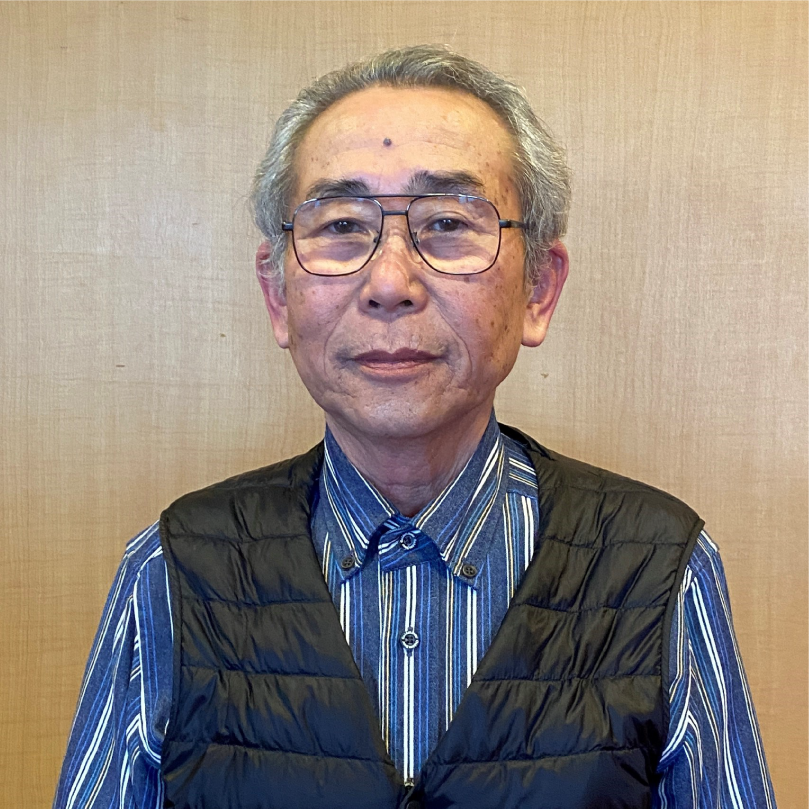 We are
about to enter the
14th year since we began our lives in evacuation following the 2011 earthquake and nuclear accident. Whenever I
returned home on temporary visits, I was overcome with an indescribable feeling as I saw the interior and
exterior of my house gradually decaying. Seeing the surrounding fields and farmland overgrown with willows and
grass, falling into disrepair, filled me with complex emotions—both sadness and frustration.
We are
about to enter the
14th year since we began our lives in evacuation following the 2011 earthquake and nuclear accident. Whenever I
returned home on temporary visits, I was overcome with an indescribable feeling as I saw the interior and
exterior of my house gradually decaying. Seeing the surrounding fields and farmland overgrown with willows and
grass, falling into disrepair, filled me with complex emotions—both sadness and frustration.
Amidst this, the evacuation order for the Shimo-Hatori District was lifted, and efforts to preserve
farmland began. I initially participated in these preservation activities from Saitama, but I have since moved
to Minamisoma City. While farming has resumed in our district, the area west of my property remains a
“difficult-to-return zone,” so I can only enter my home with special permission.
Recently, the Oaza Association approved the creation of an Oaza booklet, with Toshiro Kibata serving as
the initiator, at its March 2024 meeting. I am deeply grateful to Mr. Kibata, as I believe this project would
never have come to fruition without his strong commitment.
I feel that by creating this booklet, we are helping to preserve our memories. Over the long years, as the
landscape gradually changes, homes disappear, and untouched land becomes overgrown, I worry that when the next
generation—and the generations after that—look at this Shimo-Hatori area, they might wonder if people ever
really lived here. I am very happy that we can now preserve this history in the *Shimo-Hatori Chronicle*.
In fact, as I walked through Shimo-Hatori to gather information for this record, I rediscovered things
about the area that I hadn’t noticed while living there—such as the fact that there used to be an Atago Shrine
or a Jizo statue there. I hope this booklet will serve as a guide for those who pick it up. I also hope that
someday, when children, grandchildren, or future generations become curious about the place where their
grandparents once lived, this booklet might inspire them to visit the area.
Editor’s Note
Editor-in-Chief: AIST, Tetsuo Yasutaka
The Geosphere Resources and Environment Research Division of the National Institute of Advanced Industrial
Science and Technology (AIST) is documenting the pre-disaster way of life in Futaba Town—where areas
designated as “difficult-to-return zones” exist—through written accounts and geographic location data, in
response to the accident at the Tokyo Electric Power Company’s Fukushima Daiichi Nuclear Power Plant caused
by the Great East Japan Earthquake. As part of this effort, I was involved in the creation of this
publication.
This publication consists of “Part 1: Basic Information” and “Part 2: Memories of Shimo-Hatori.” For
Part 1, we collected and organized information about Shimo-Hatori found in the town’s history and materials
held by the town hall. In Part 2, although limited in scope, we compiled accounts shared with us by
residents. While memories are subjective, our primary focus was on conveying the daily life of Shimo-Hatori
as depicted in these heartfelt stories, rather than presenting objective facts.Regarding the section “The
Impact of the Great East Japan Earthquake,” included at the end of Part Two, the editorial committee debated
whether it was appropriate to compile the accounts we were able to gather, given the complex and varied
emotions that have surrounded this topic. We decided to include these accounts, adding our own words to
provide as broad a perspective as possible, though they may not be entirely sufficient. At the same time, we
viewed this chapter not as a conclusion to be finalized at this moment, but rather as a prologue to our
collective search for a better narrative of Shimo-Hatori.
On the day I visited Shimo-Hatori for research, I was blessed with fine weather and encountered
beautiful scenery—including shrines and temples cherished by the community, reservoirs, and vegetables
growing lushly in the farmlands.Furthermore, thanks to Mr. Kibata and everyone else who provided us with
documents and photographs and took the time to share their stories, we were able to vividly imagine the
vibrant life of the community. We pray that the charm of this region will serve as the foundation for its
future revitalization, and that the future that lies ahead will be bright and prosperous.
Parts of the interviews featured in this issue were conducted with funding from the Ministry of the
Environment and the Japan Environment Restoration and Conservation Agency’s Comprehensive Environmental
Research Promotion Fund (JPMEERF22S20906). We also received cooperation from the Futaba Town Office in
collecting materials. We would like to express our gratitude here.
- Editorial Committee for the Shimo-Hatori District Gazette:
-
Toshiro Kibata (Shimohatori Administrative District, Futaba Town)
Hiroshi Enouchi (Shimohatori Administrative District, Futaba Town)
Toshihiko Onishi (Shimohatori Administrative District, Futaba Town)
Isamu Kitazaki (Shimohatori Administrative District, Futaba Town)
Kaname Kurita (Shimohatori Administrative District, Futaba Town)
Mitsuo Horikawa (Shimohatori Administrative District, Futaba Town)
Hiromi Maeda (Shimohatori Administrative District, Futaba Town)
Hidenori Motobayashi (Shimohatori Administrative District, Futaba Town)
Minoru Yokoyama (Shimohatori Administrative District, Futaba Town)
- Supervised by:
- Tetsuo Yasutaka (National Institute of Advanced Industrial Science and Technology)
- Edited by:
- Momo Takada (National Institute of Advanced Industrial Science and Technology)
Yumiko Kanai (National Institute of Advanced Industrial Science and Technology) - Interviewed by:
-
Momo Takada (National Institute of Advanced Industrial Science and Technology)
Yumiko Kanai (National Institute of Advanced Industrial Science and Technology)
Shinko Fujii (National Institute of Advanced Industrial Science and Technology)
Daiki Sasaki (National Institute of Advanced Industrial Science and Technology) - Illustrations:
- Yoriko Igarashi (National Institute of Advanced Industrial Science and Technology)